Blog / 17 August 2025
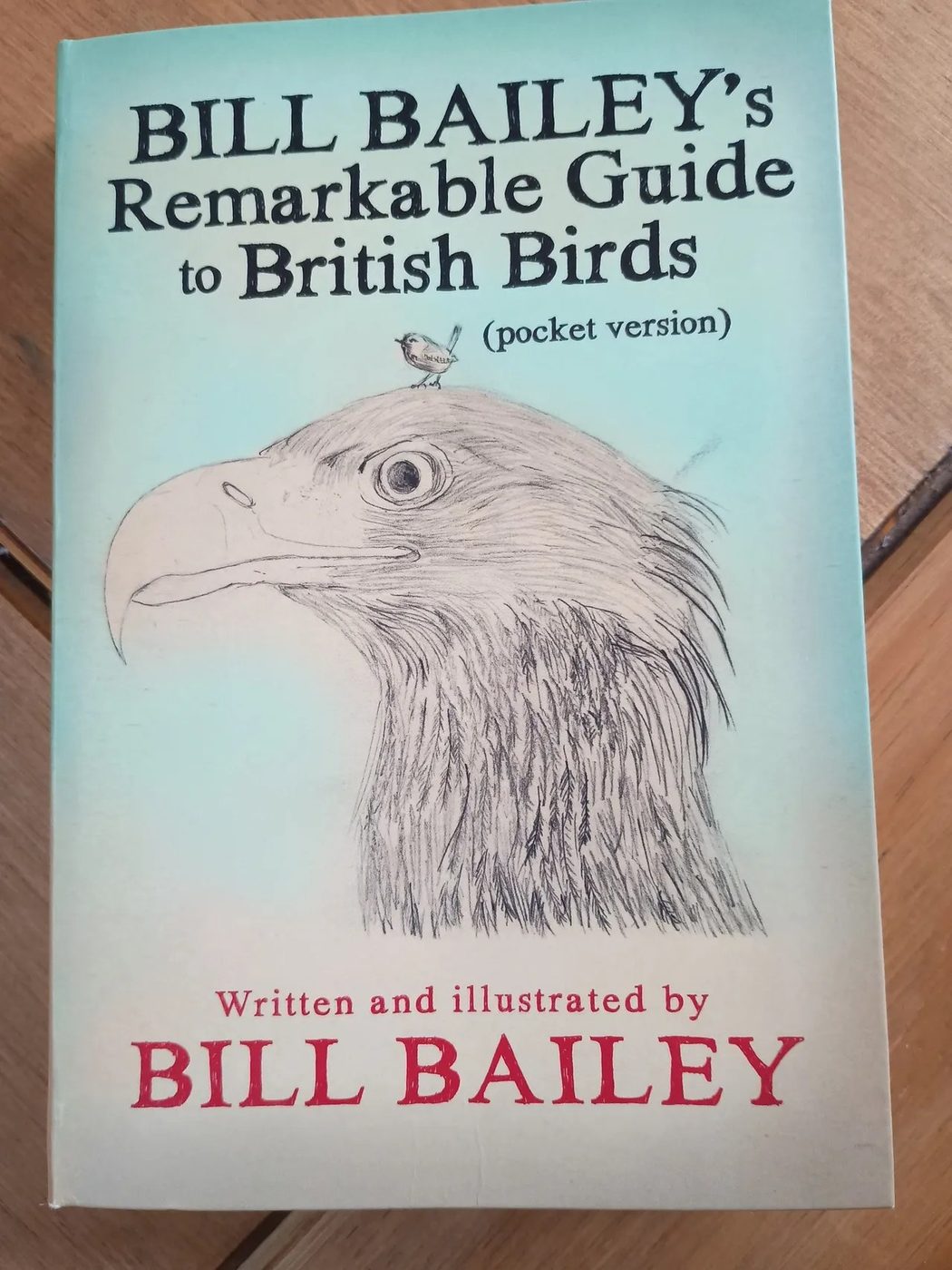
Books, bird illustration, methods and extinction
Books
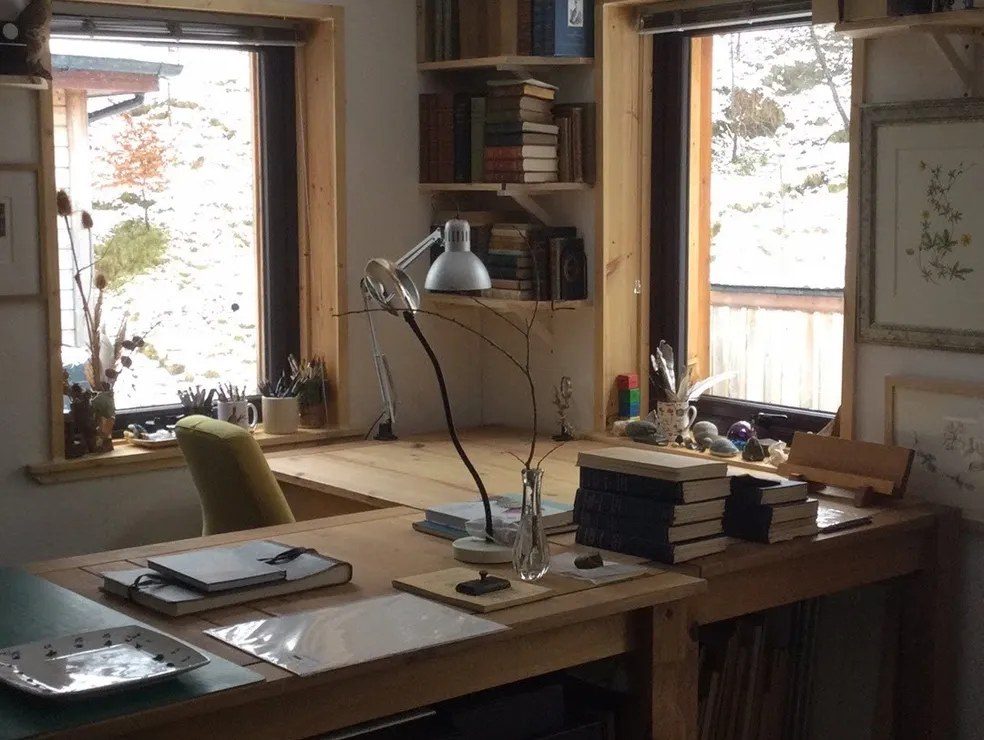
I have lots of books, currently in my studio I have approximately 400... the rest are in the house!
The books I have are nearly all related to my work in one way or another and total around 1200, I used to have more... just over 3000!
When I moved from Derbyshire in 2018 I had to have a serious book collection review. The move was many things, one of which was a down size and unfortunately I couldn't keep them all. At first I had no idea how I would choose one book from another, but then I came up with a process, and it worked brilliantly.
Holding each book I asked myself five questions...
- When did I last read you?
- Were you useful to me?
- Are you still useful?
- Have I enjoyed owning you?
- Am I emotionally attached to you?
If there were three or more negative replies to these questions then it was time for the book to continue its onward journey, someone else's turn to use, enjoy (or not) and own. The books I didn't keep were donated to a community arts project.
Bird illustration
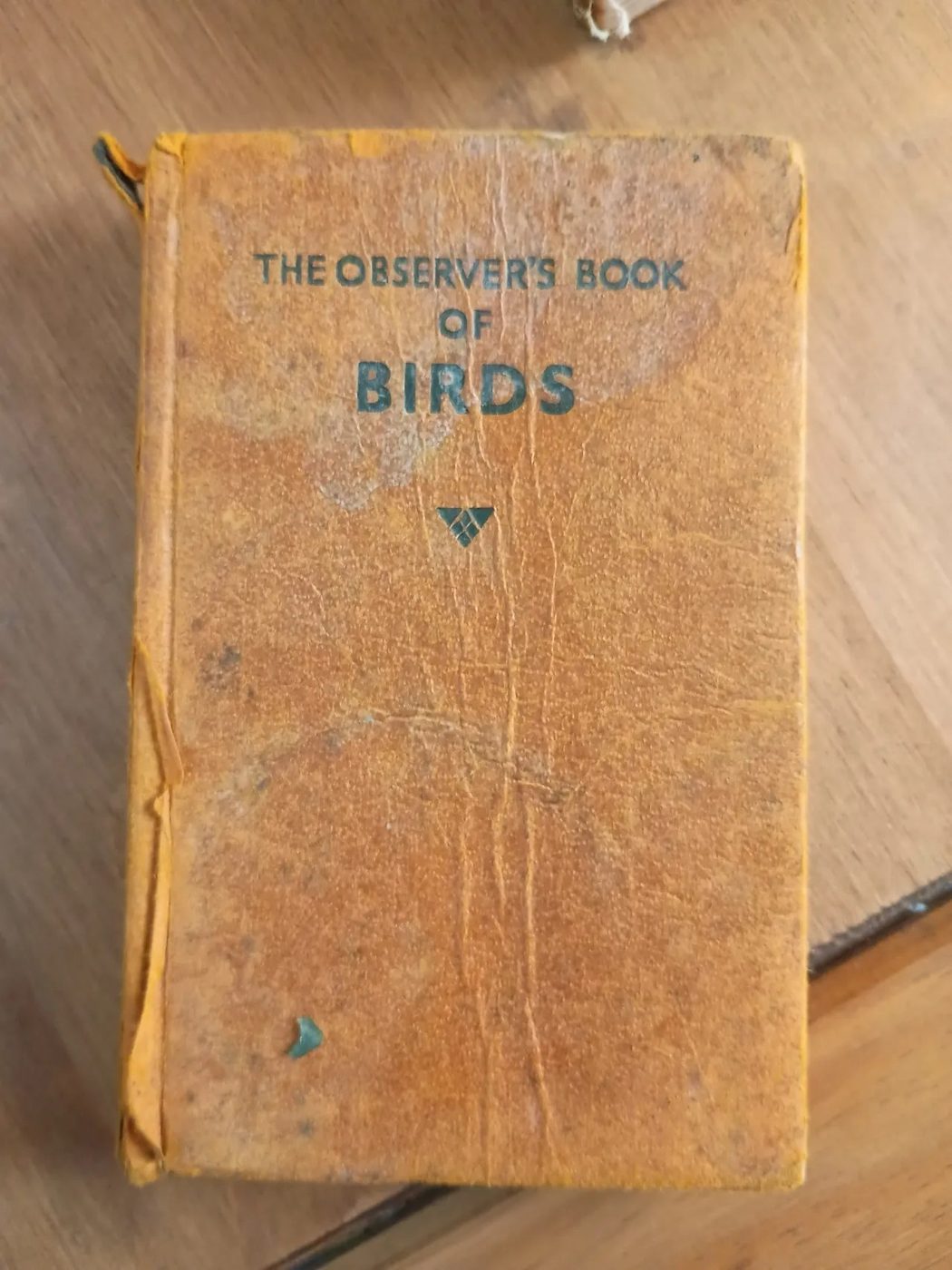
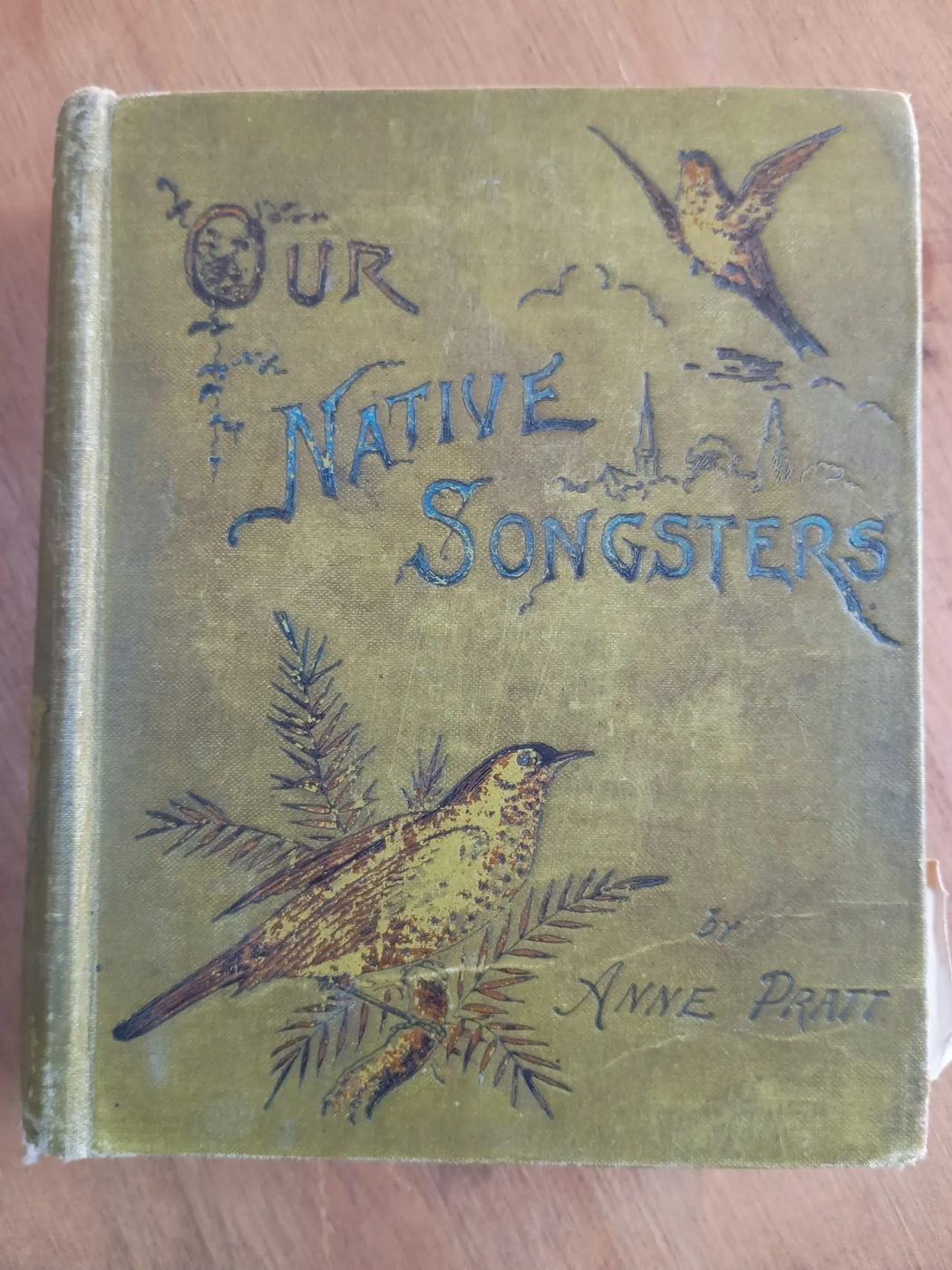
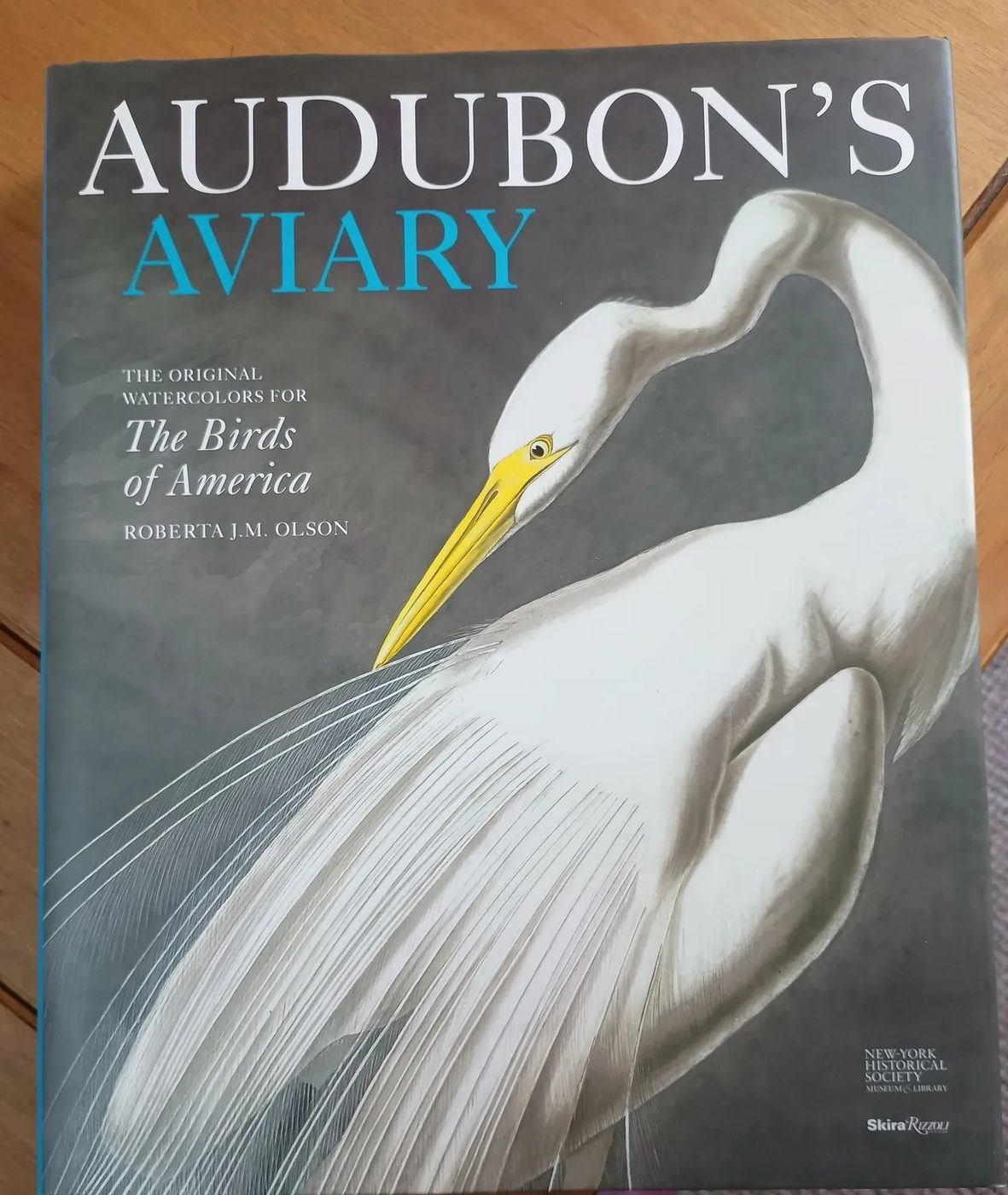
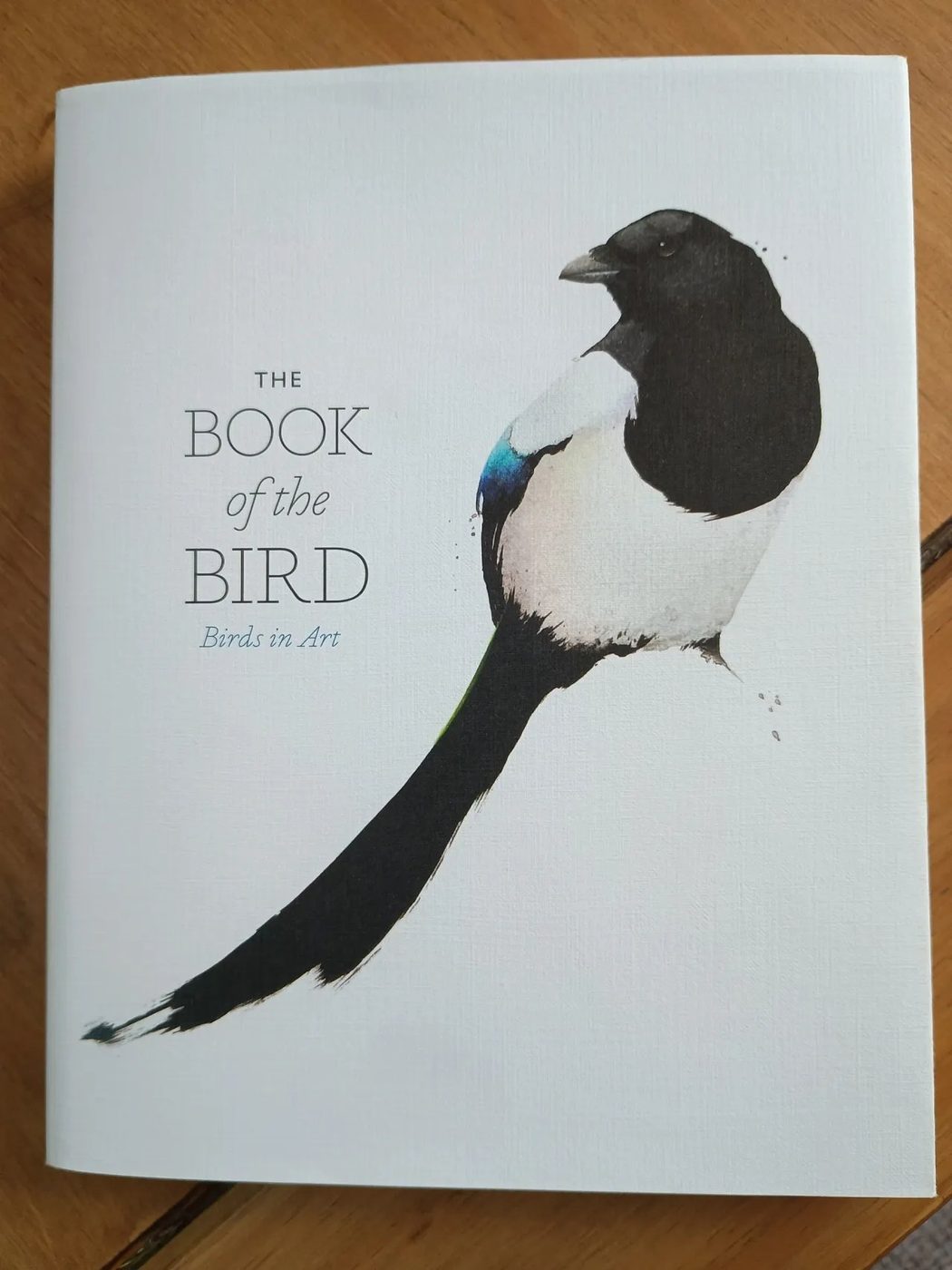
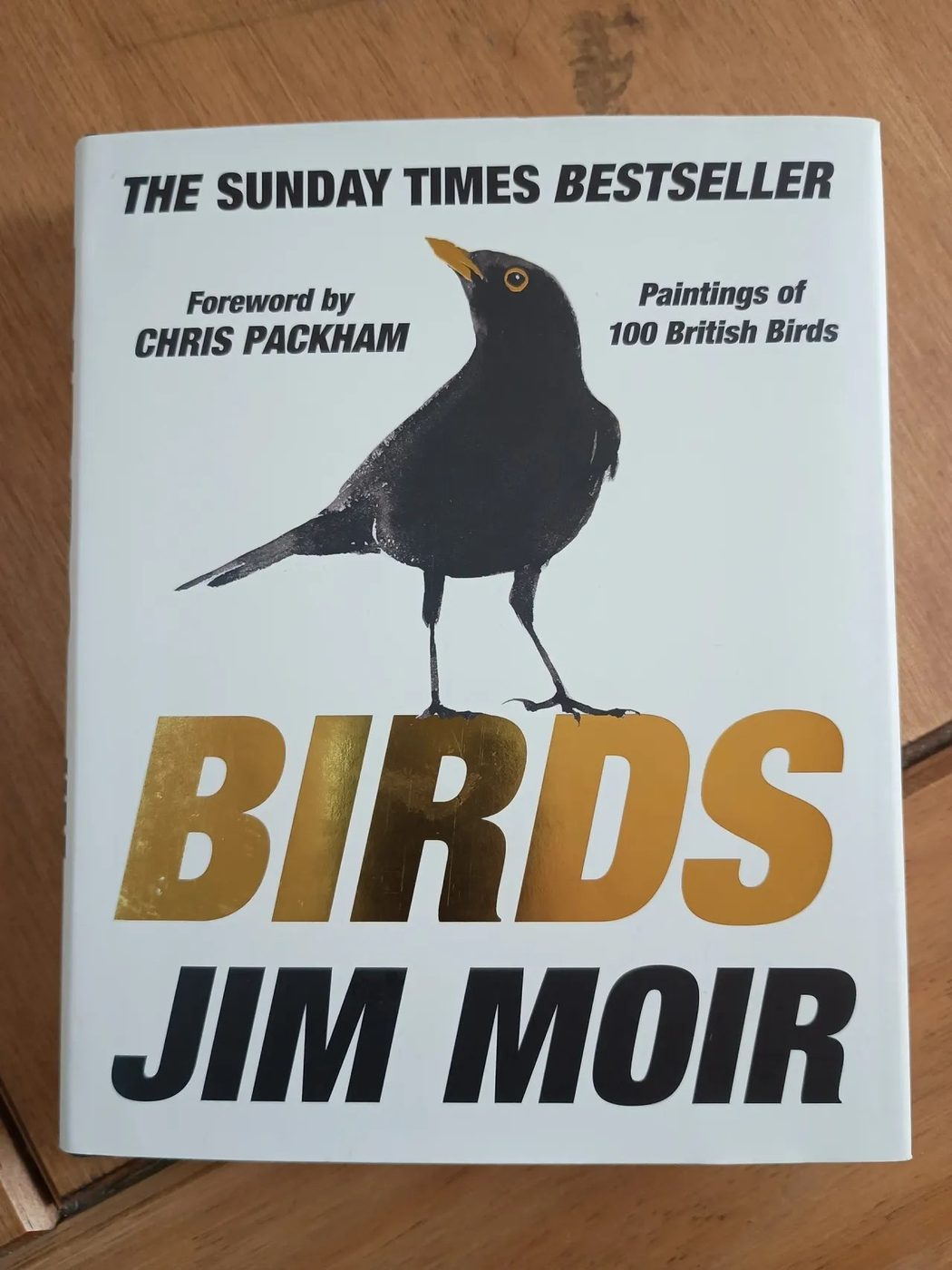
Many of my books are related to ornithology, some of which are quite old, they are a continual source of reference and inspiration.
The information within these books comes from a different age, the age before cameras and the extensive amount of knowledge we have today.
I think nowadays we have a different way of looking at things than our predecessors. Observing with a catalogue of learned information in our heads, influencing how we are looking and what we see. Careful observation is a key element when building a picture... whether it be detailed or abstract.
Birds are rarely still for long, and trying to capture them with a sense of movement on a flat surface is a challenge. I just try to take a moment in their busy lives, a few seconds when they are moving slowly or even still, and lock it in time.
My books are just one tool that help me try and achieve this.
Many of the older books have engravings rather than copies of a painting to illustrate the bird, the technology simply wasn't available to reproduce the paintings.
Engraving an image onto wood meant that it could be incorporated within the text (letterpress) in the production of books. The result was high quality illustrations at a low price. An artistic printmaking process had gained a super practical purpose in the printing of books as well as being a beautiful thing in its own right.
Today the possibilities for the reproduction of a painting are endless, from giclée prints to household items, greetings cards, commercial packaging and lots more.
Extinction
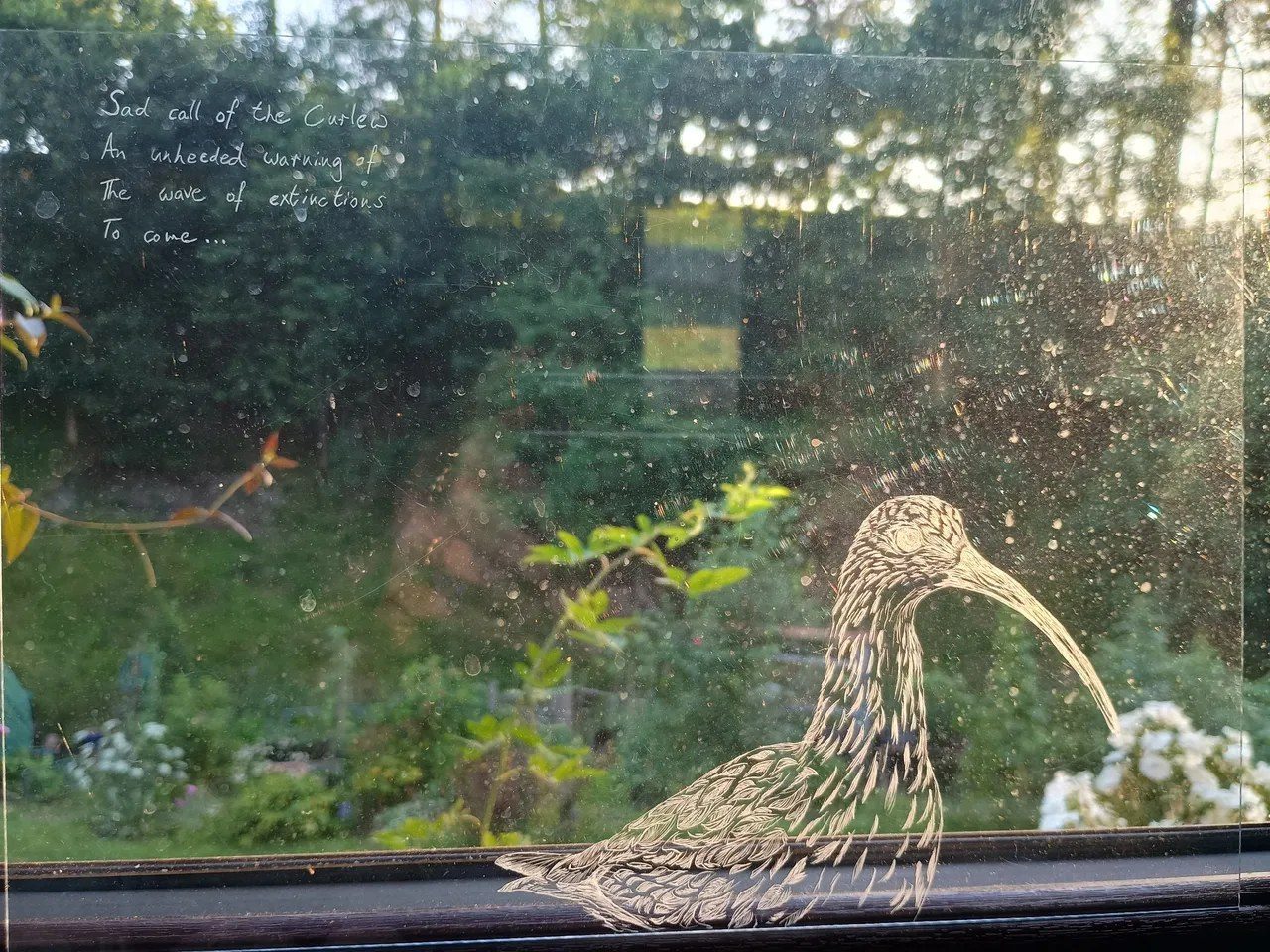
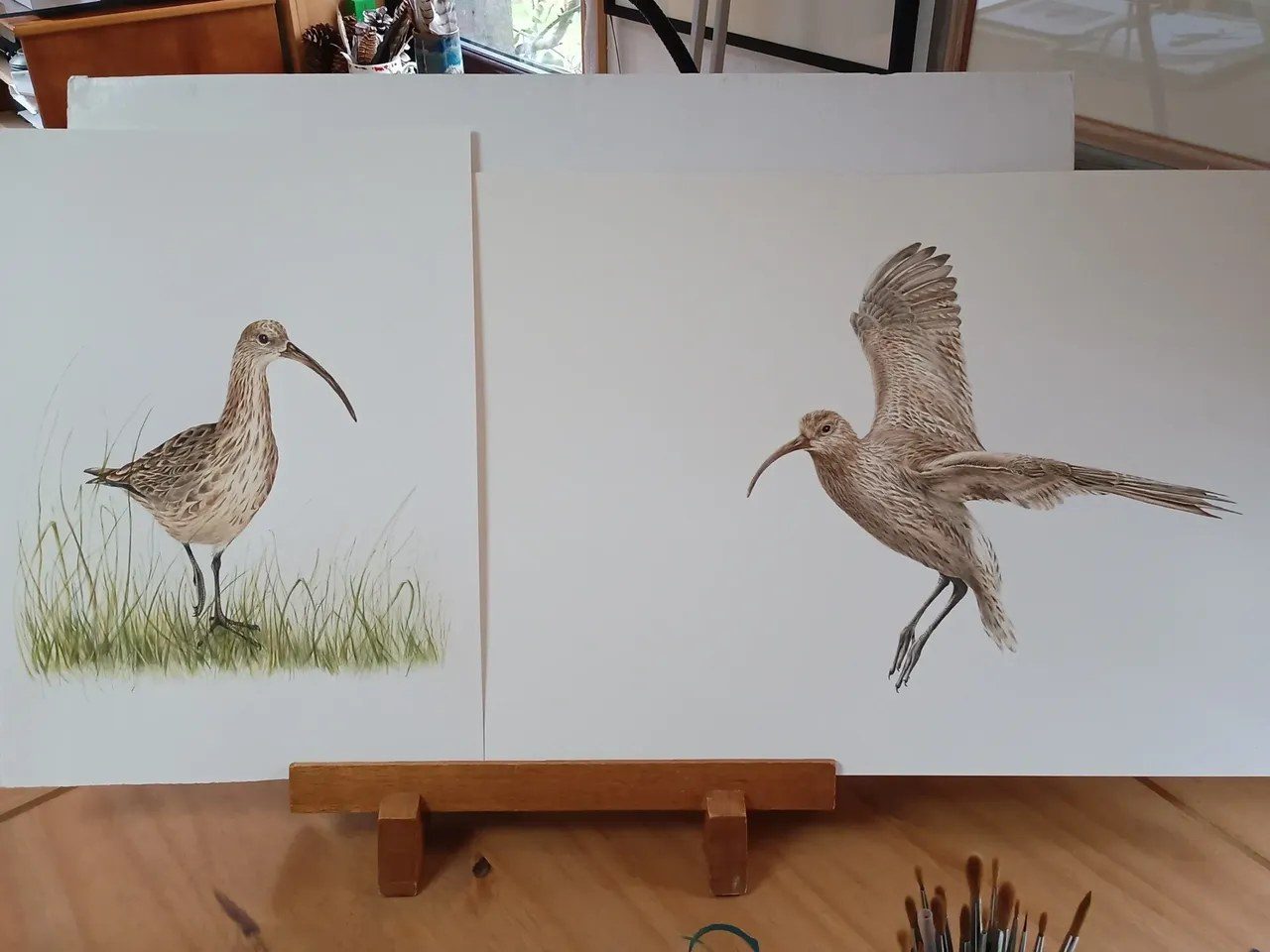
Recently I have been studying the Curlew (Numenius arquata) one of the most beautiful, elegant birds I have ever seen. I am lucky to live in an area where during the spring and summer months the Curlew is resident.
Sitting quietly on the moorland the world of the Curlew shows itself to me, and its melancholy call is truly a thing of beauty to hear. Binoculars, camera and a sketchbook are the initial tools that help me make the painting or etching.
Every year in early spring they return to this ancient breeding ground to nest and raise their young, hopefully unhindered by humans and grazing animals.
There is much poetry inspired by the Curlew, some of the best by Norman MacCaig, Edward Grey, W.S. Graham and Henry Williamson.
Human activity primarily (but not excluding hunting) the unsustainable use of land, water, energy use and climate change is responsible for the devastating decline in breeding populations, and is now of international importance. In 2015, Curlews were added to the RED LIST on the UK Conservation Status Report... this means a conservation priority with the species needing URGENT action.
It seems that a lot of the beautiful flora and fauna of this world is under the threat of extinction, habitat loss proposed as the main cause, it has been this way for a long time.
In November 2024 the Slender-billed Curlew (Numenius tenuirostris) was confirmed as likely extinct, with the last sighting on 25th February 1995 in Morocco. Records show that this beautiful and rare bird was still being hunted as late as the 1980's in the Merja Zerga wetlands of Morocco, one of the last wintering grounds of the species. How unbelievably sad this is and what was it for.
Back to books...
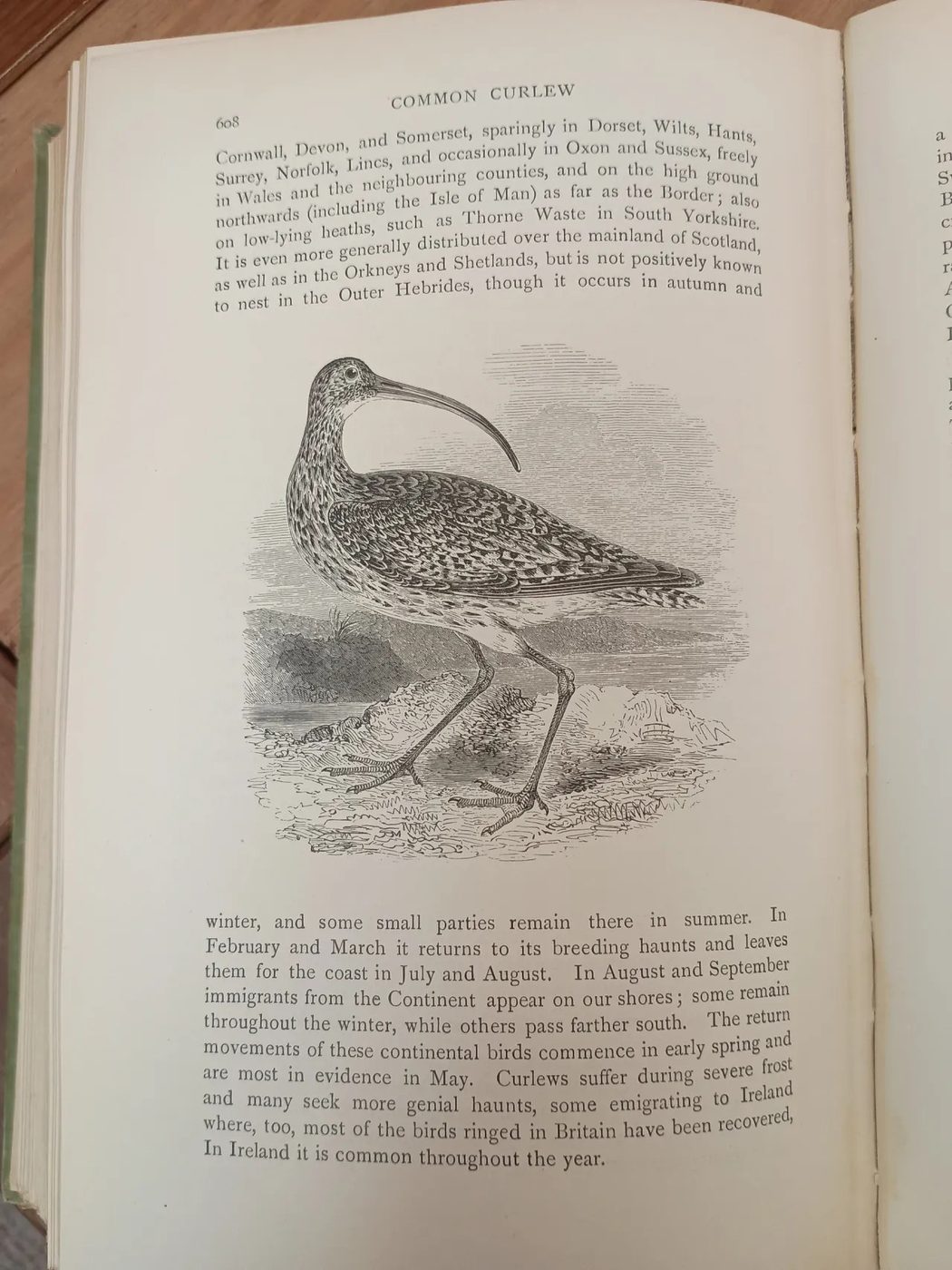
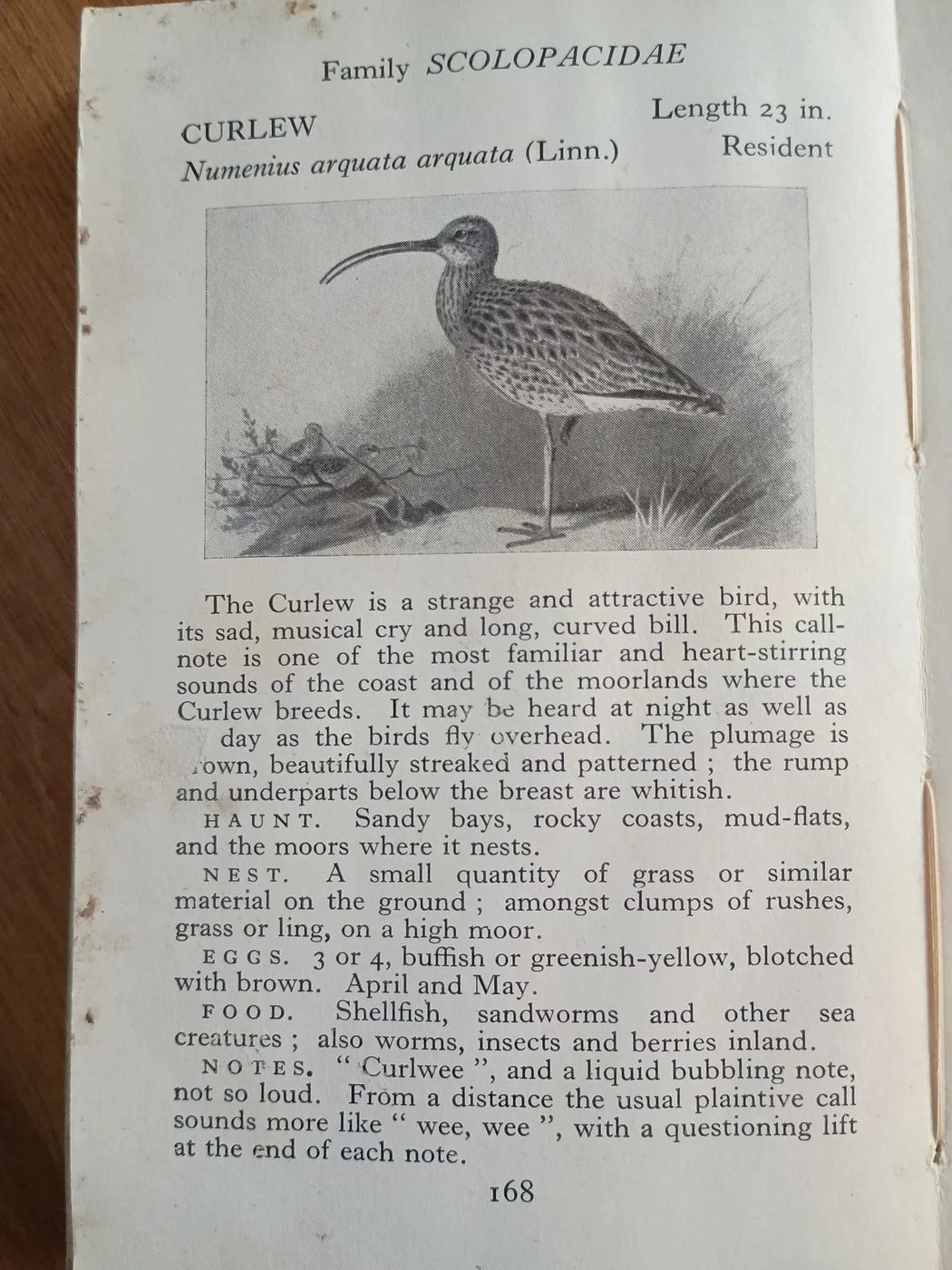
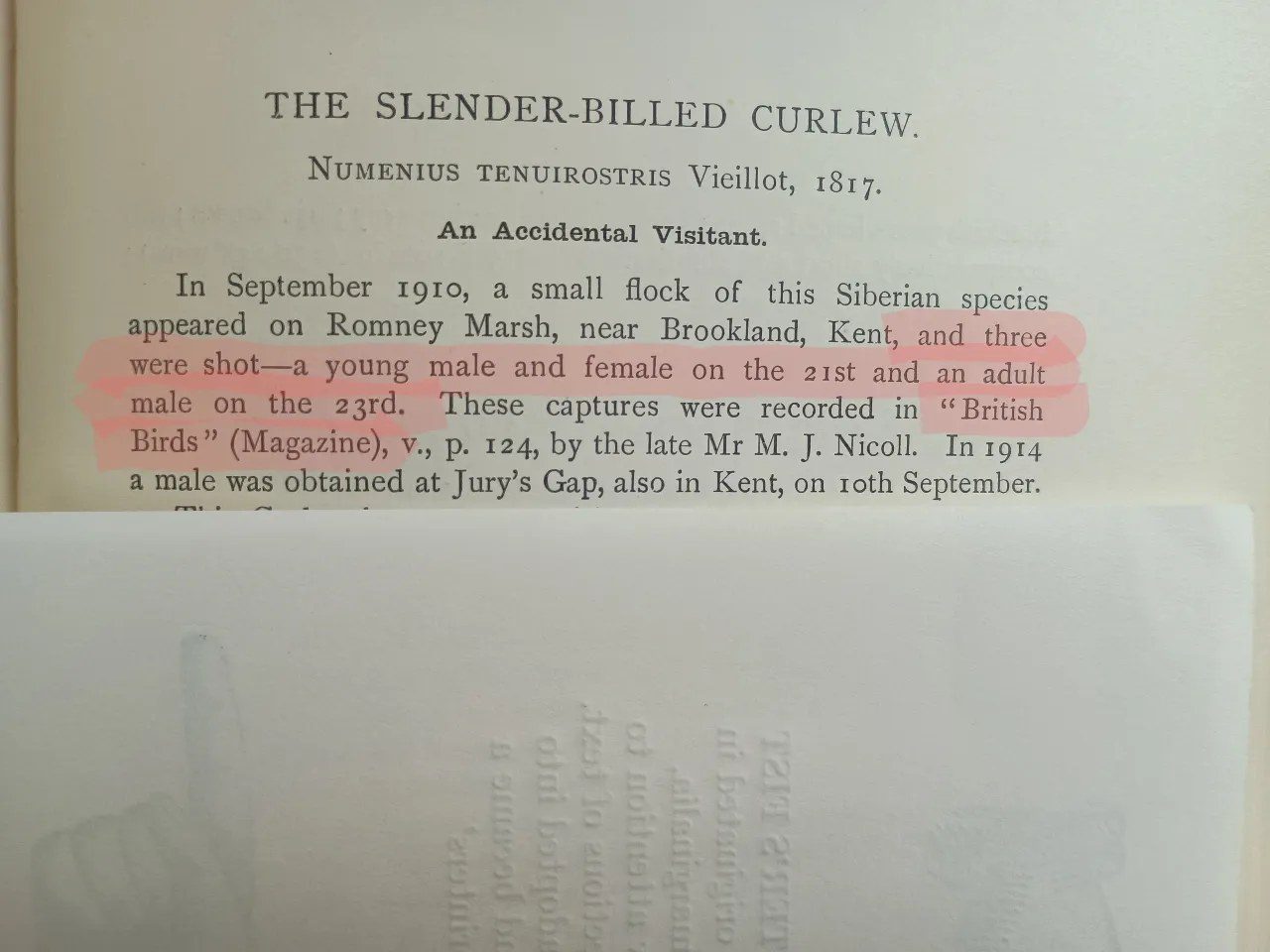
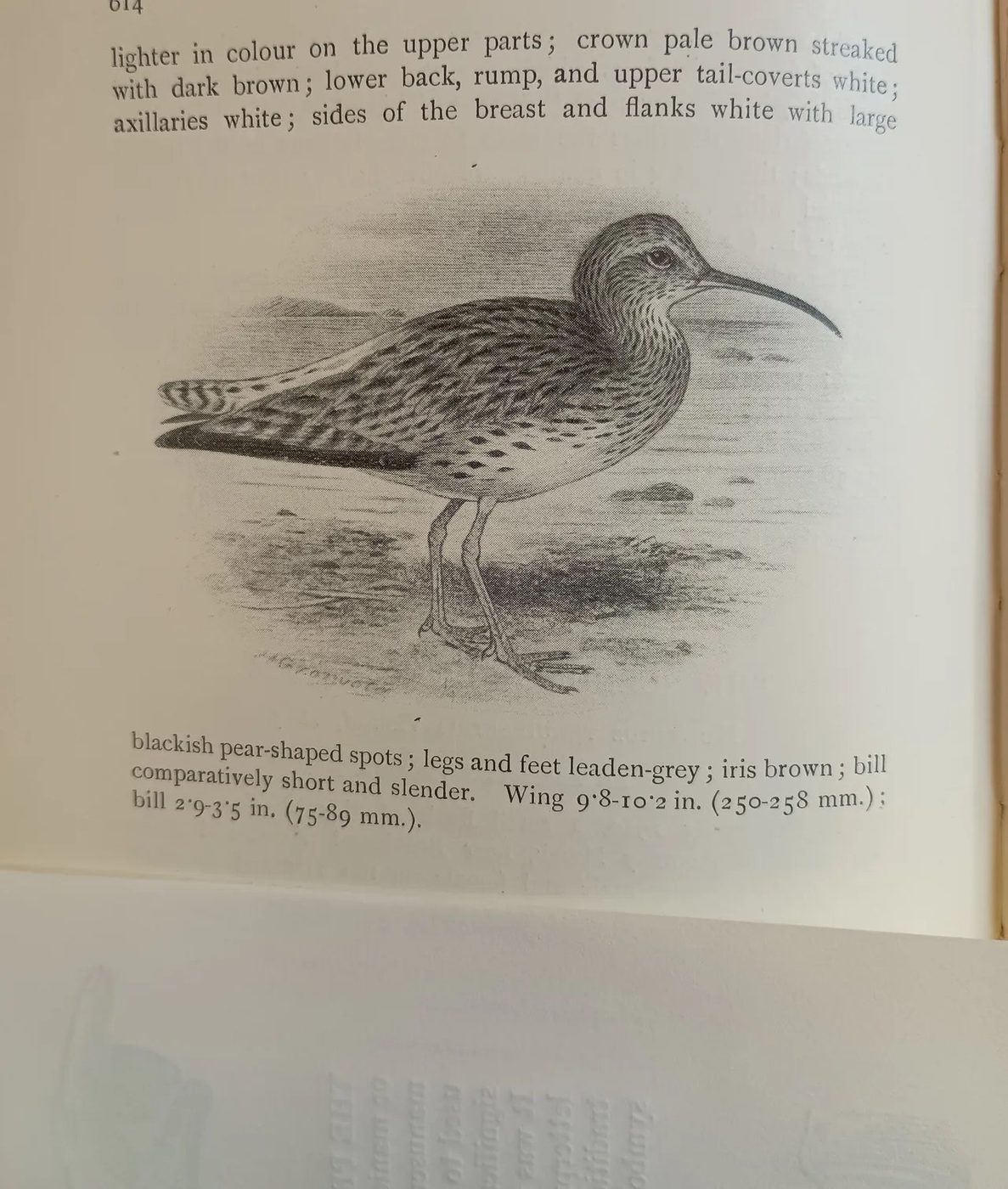
I have photographed a couple of pages from one of my books.
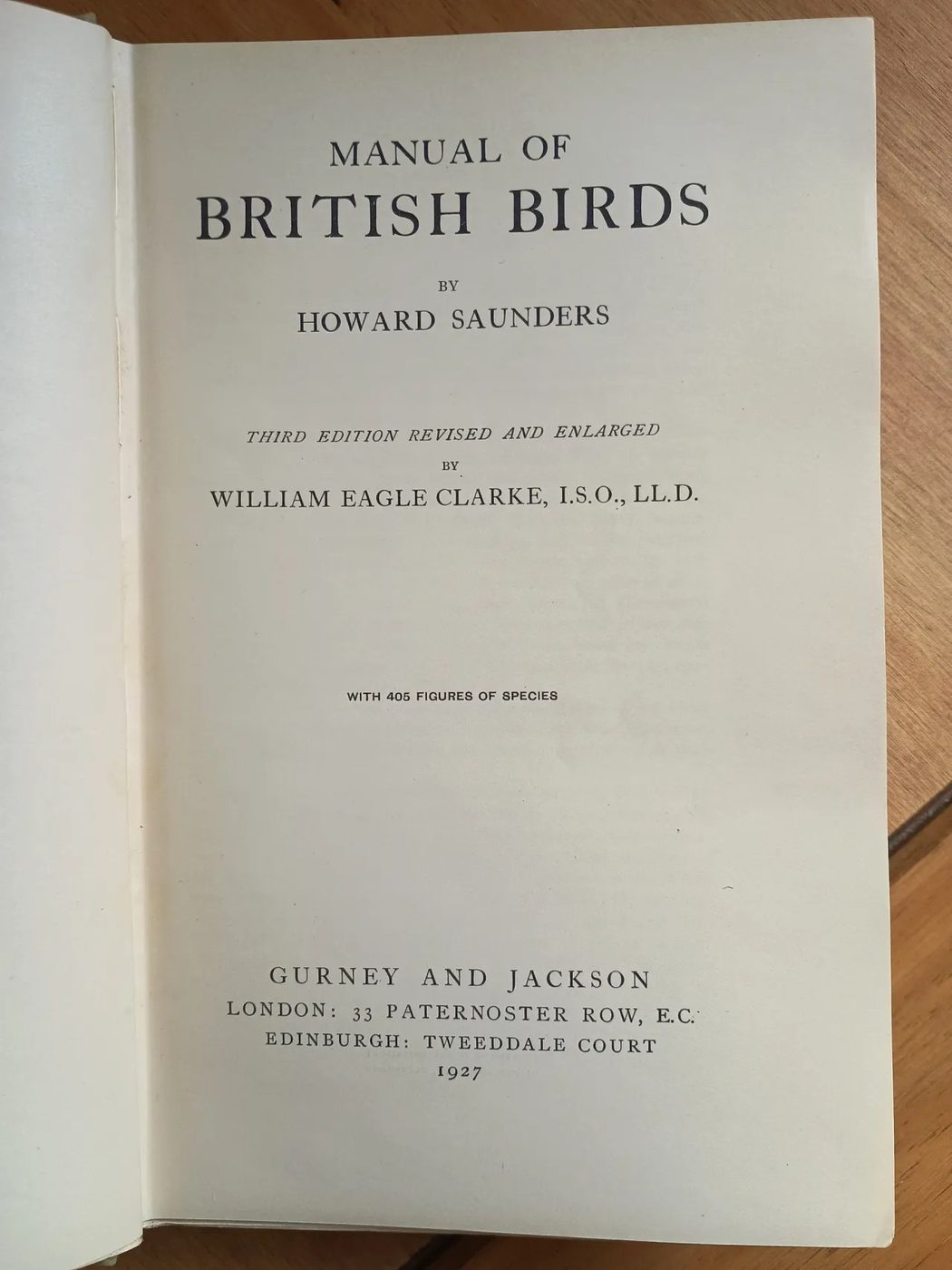
The 'Manual of British Birds' (Howard Saunders) printed in 1927 a revised edition of the original from 1885 (Yarrell's British Birds).
It contains some of the most beautiful wood engravings, (a type of printmaking process) figured from original drawings by Mr. H. Gronwold.
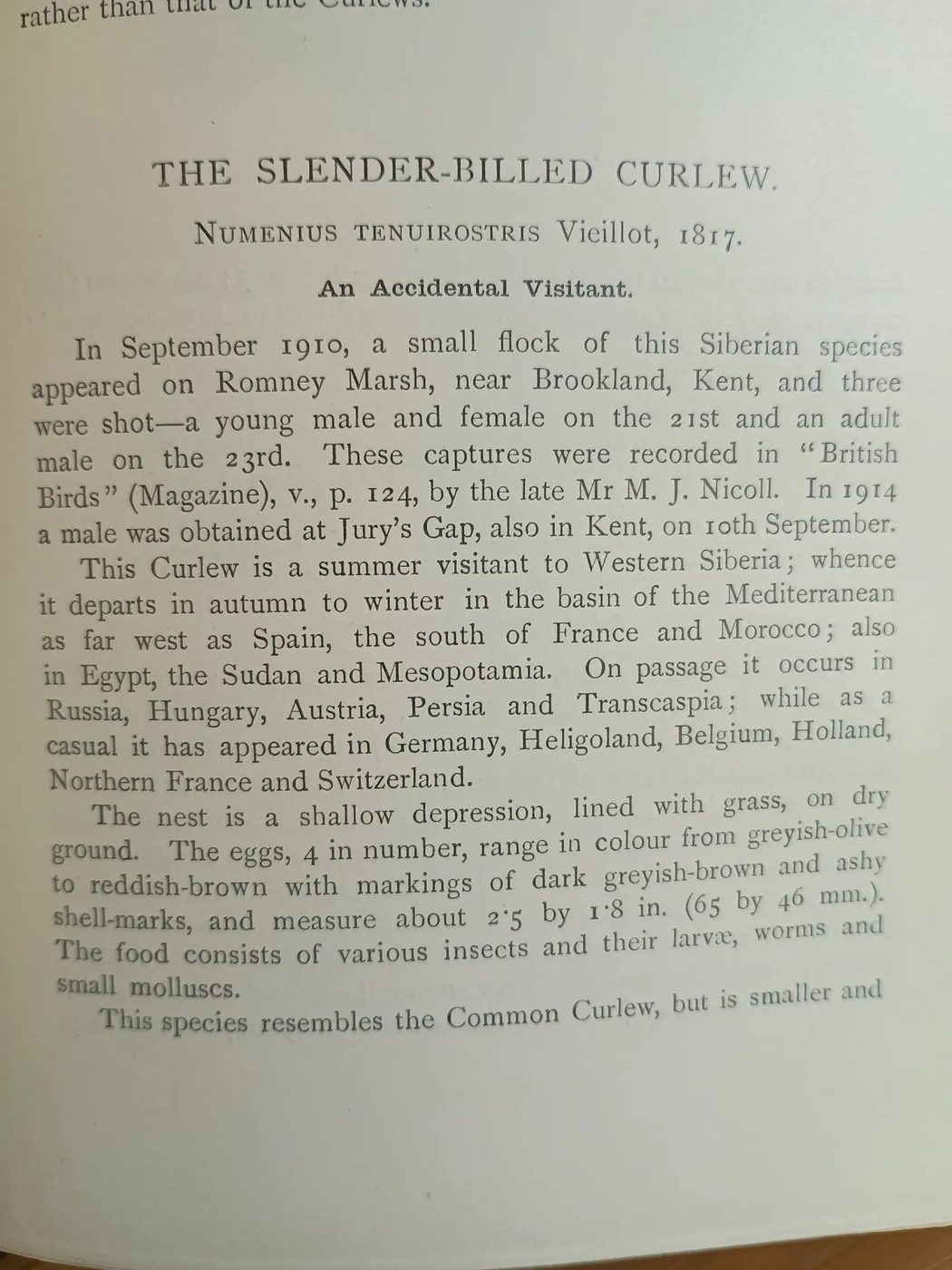
The page describing the now extinct Slender-billed Curlew notes that in 1910 a small flock of summer visiting birds appeared on Romney Marsh, whereupon three were shot in order to record and 'observe'.