Blog / 16 July 2025
Calanais Standing Stones: a brief history in three paragraphs!
Far to the north in the Outer Hebrides stands a monument, an incredible collection of Megalithic standing stones and one of the best preserved Neolithic monuments in the world.
This is truly a special place and when approached across the bleak moorlands the stones become visible along a prominent ridge, silhouetted against the vast sky.
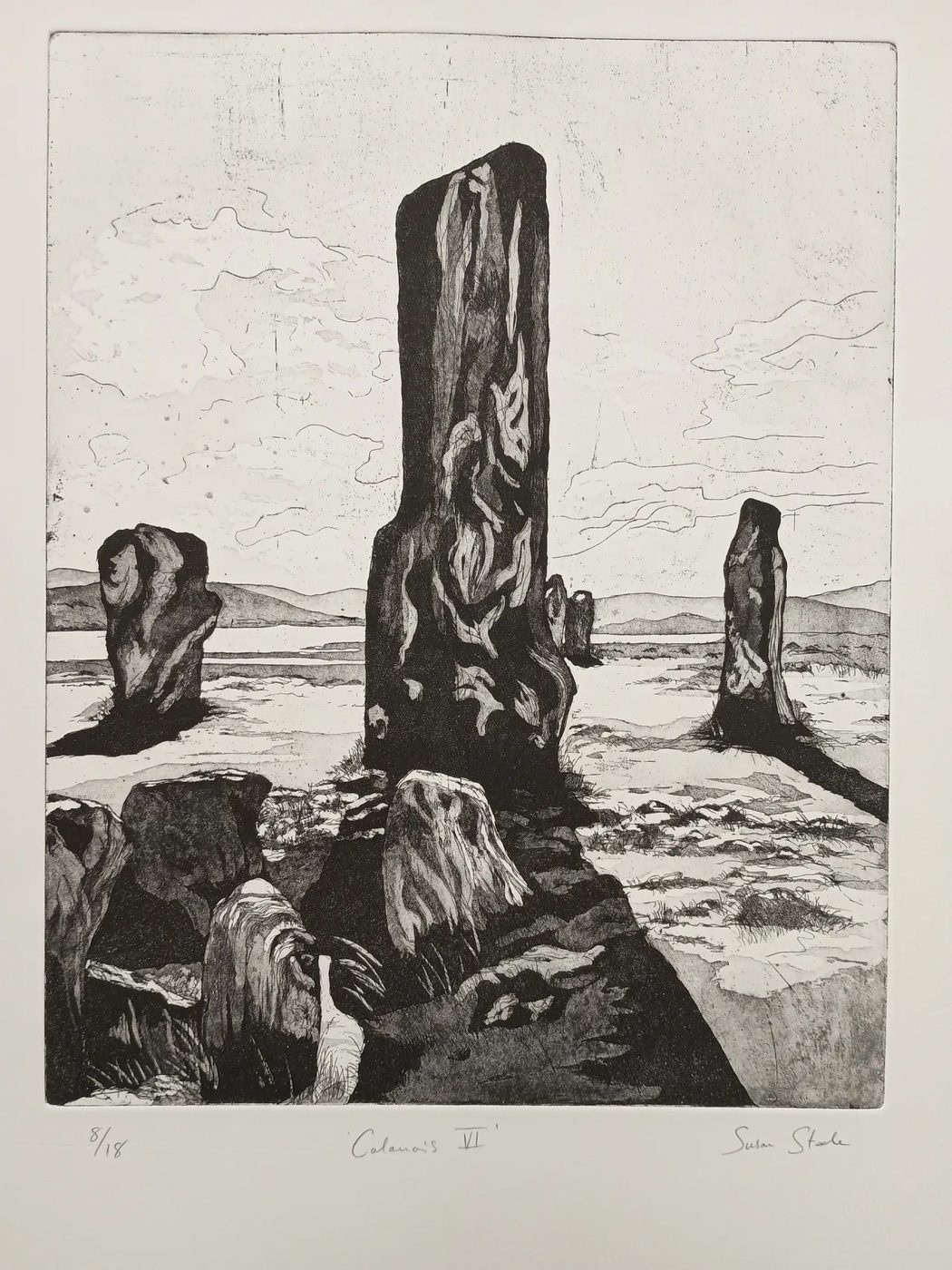
The Calanais standing stones erected around 5,000 years ago predate the Stonehenge monument. The stones range in height from 2.5m high with the most impressive megalith stone almost 4.8m tall standing in the centre and set at one end of a burial chamber.
The stones are composed of Lewisian gneiss which can be found in a natural outcrop approximately a mile away from the site.
There are many theories as to the purpose of the monument, and that may never be fully understood, but the mystery is fascinating.
Patrick Ashmore who excavated at Calanais in the early 1980s wrote: 'The most attractive explanation is that every 18.6 years, the moon skims especially low over the southern hills. It seems to dance along them, like a great god visiting the earth. Knowledge and prediction of this heavenly event gave earthly authority to those who watched the skies.'
In the Neolithic age Lewis was warmer, drier and less windy, the sea level was lower. By the Iron age the climate had changed, the conditions on Lewis were cooler and damper. This resulted in the build up of peat and by the nineteenth century most of the island was covered in peat nearly 2m deep.
We have the local population of around 1857 to thank, who whilst cutting peat revealed the true height of the stones which had been buried beneath the peat for 3,000 years.
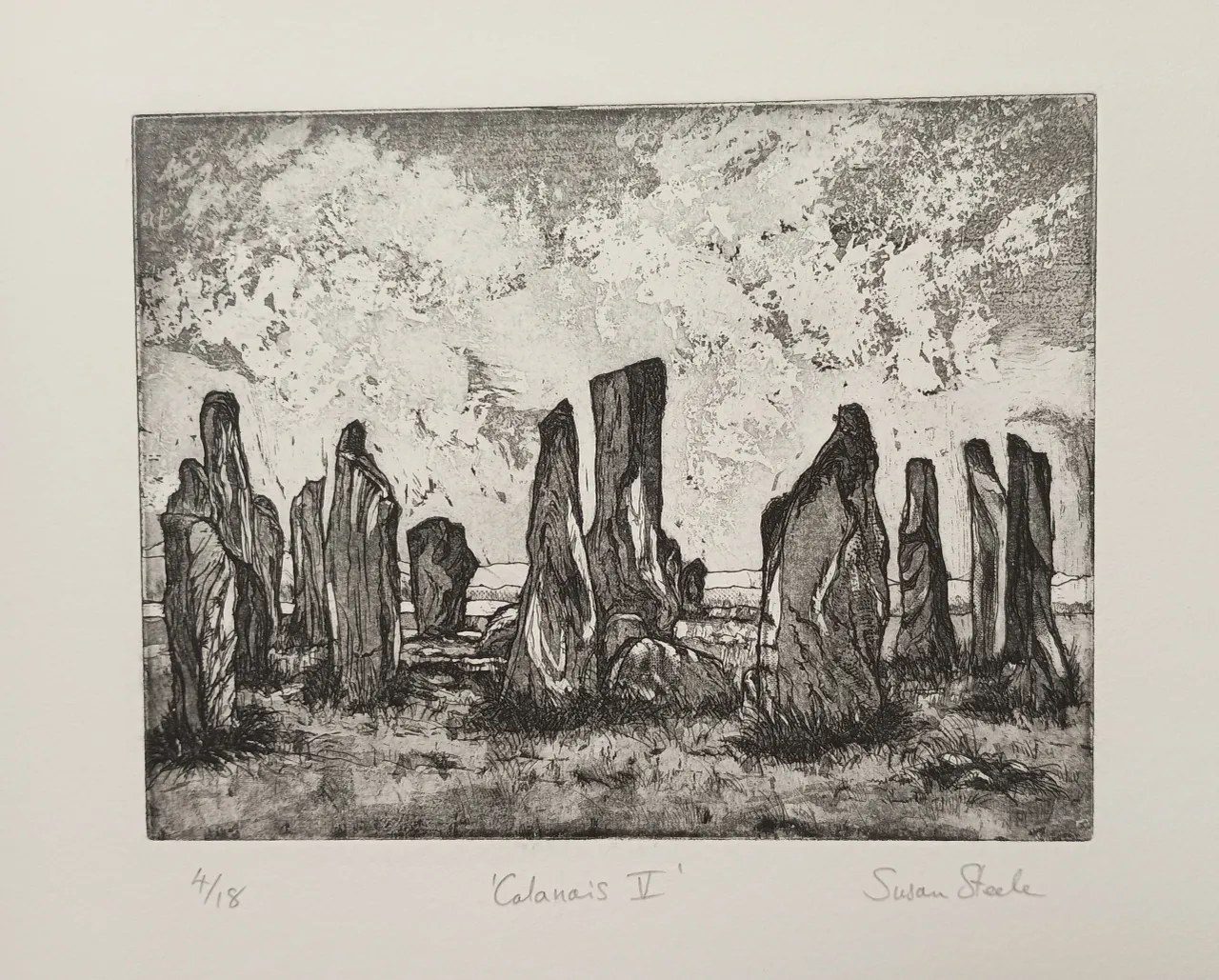
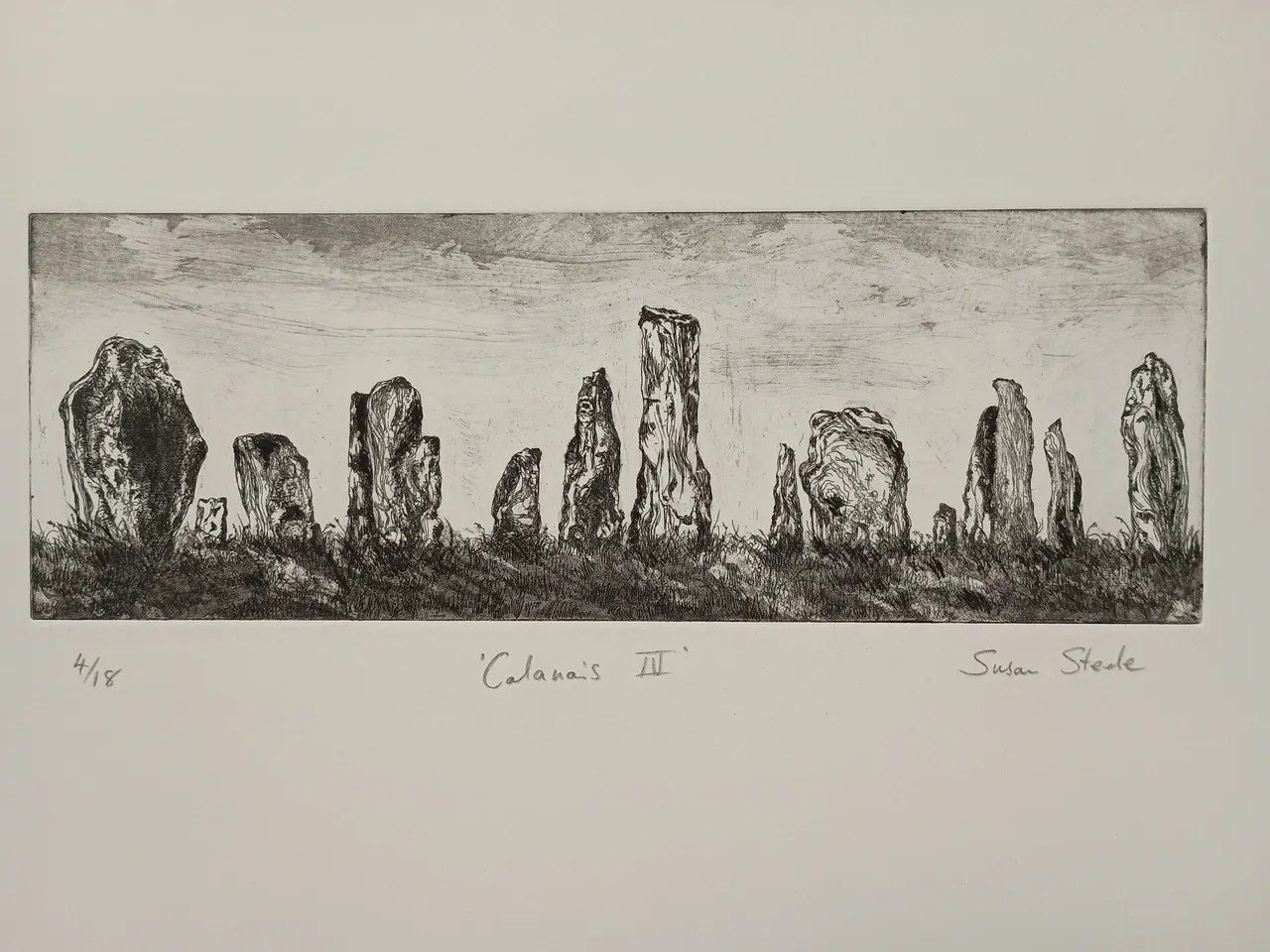
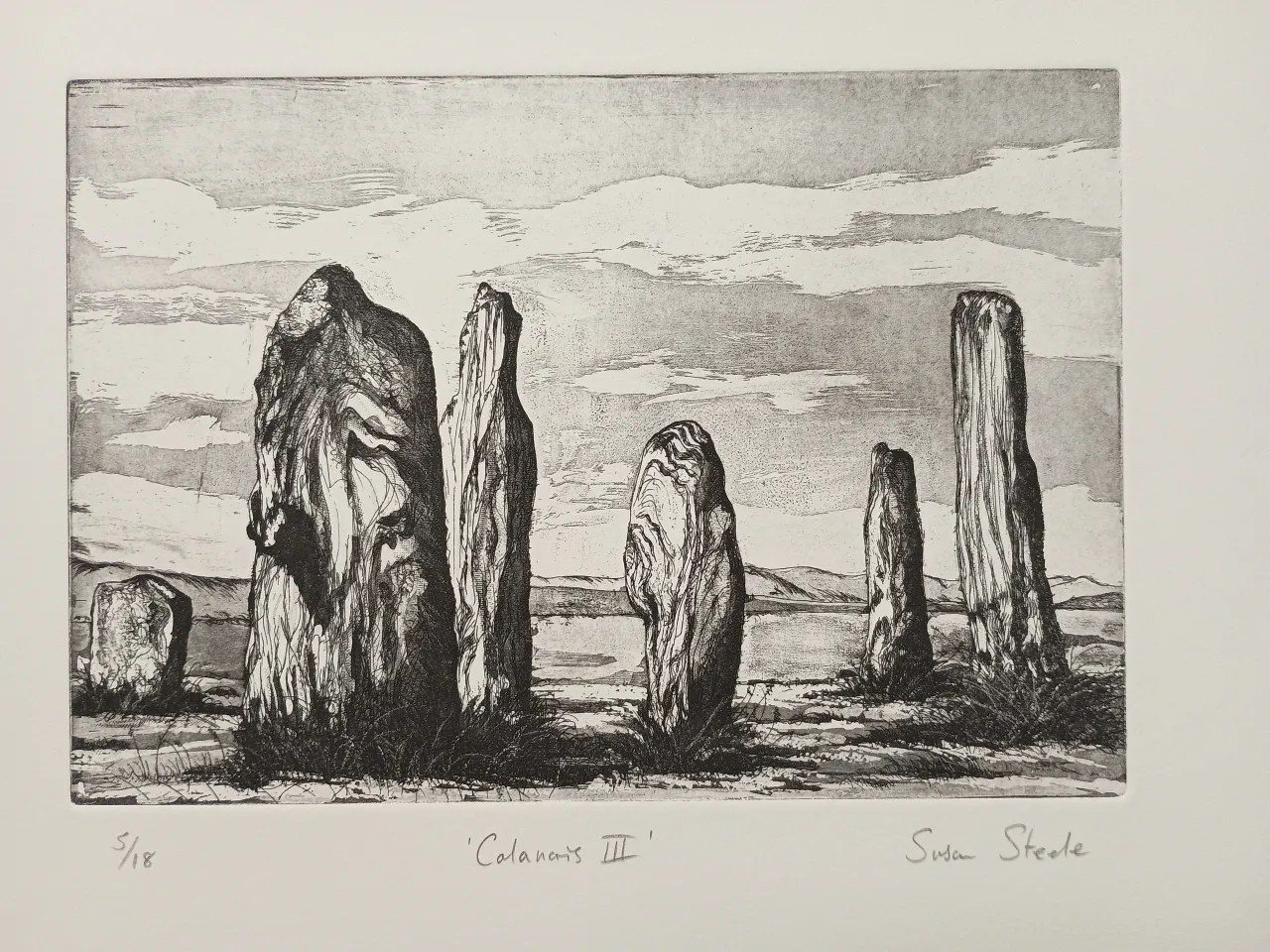
Calanais Etchings
When I returned home from my visit to Lewis and Harris I had around two hundred photographs and many sketches which served as my reference material for a series of etchings.
During the visit I visited several Megalith standing stone sites and plotted them on the map to see how they may have interconnected visually within the ancient landscape. This was an interesting project and helped me become immersed in the mystery of their meaning and their architects.
When standing amongst these amazing monuments trying to imagine a time thousands of years ago when they were placed in this landscape, right next to where I was standing! I felt so privileged and it was truly an inspirational experience.
It's relatively easy to take photographs to record information and potential composition ideas but taking the time to draw what is in front of you is also extremely useful.
Drawing takes time, during this time you look more, take in more 'feeling' and atmosphere rather than detail.
I think this time gives something back and returns to you in the studio, helping the work of combining, physical experience, photographic detail and impressionistic drawings to achieve your end artistic goal.
It was an enormous task looking through the images recorded on site and trying to decide which to focus on. I eventually selected six sites and began work. Perhaps next time I won't make so many!
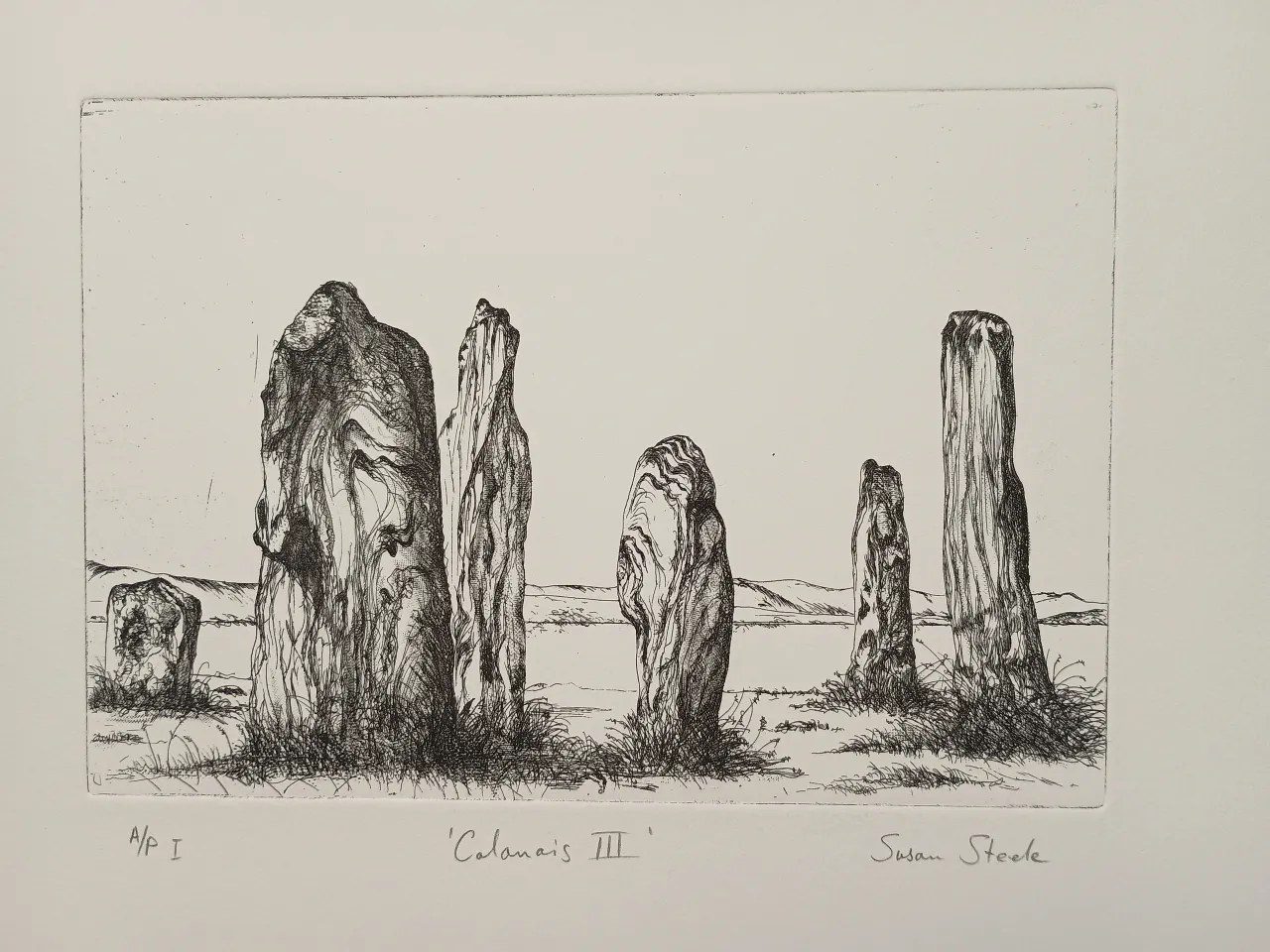
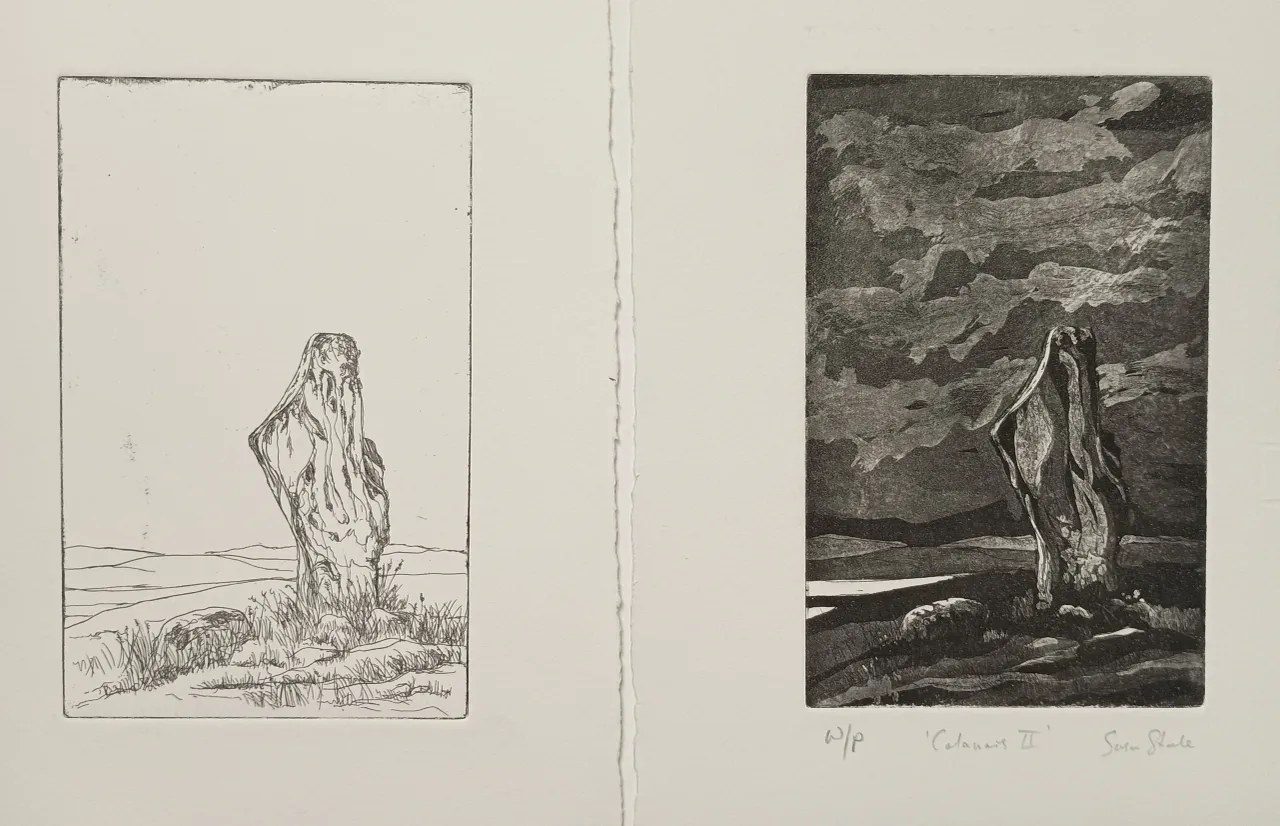
Etching... a printmaking process
The etchings were made on zinc metal plates using an acrylic resist etching method.
Traditional etching methods and materials can be toxic and difficult to use safely, the method I use is based upon the tuition I received from Master printmaker Alfons Bytautas.
During his time teaching at Edinburgh Printmakers, Alfons developed a system of etching which uses alternative techniques and materials making etching a much more accessible practice as well as safer and less expensive. The range of equipment is also much simpler.
Indeed, it is possible to teach an etching class to a complete beginner, resulting in a finished etched plate and print taken from the plate in one day!
Etching is an intaglio printing process.
The word comes from the Italian, intagliare, meaning “to incise” or “to carve”. In intaglio printing, the incised lines and areas that hold the ink are below (into) the surface of the plate.
A metal plate is covered with a 'ground' which is acid resistant, the design is scratched through this protective layer to expose the metal plate. When the plate is submerged into a salt solution it 'bites' into the metal that has been left unprotected by the acrylic ground.
Corroding into the metal you then have an etched line which will eventually hold the ink that transfers to the printing paper to make the art work.
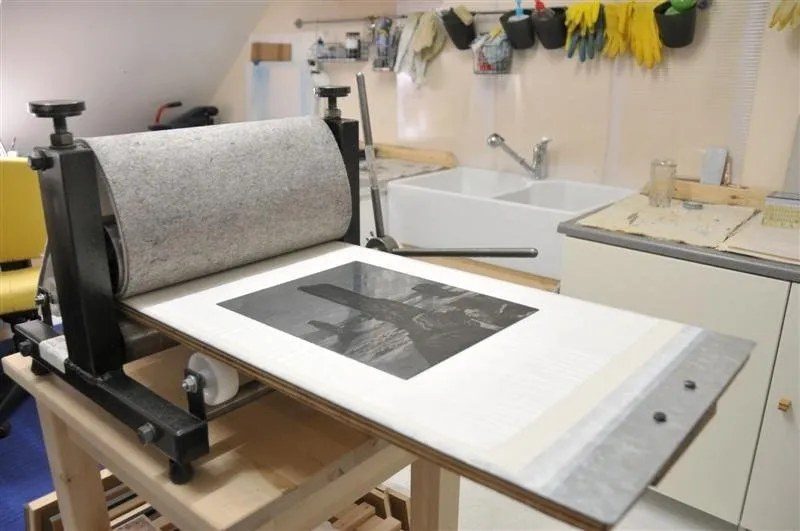
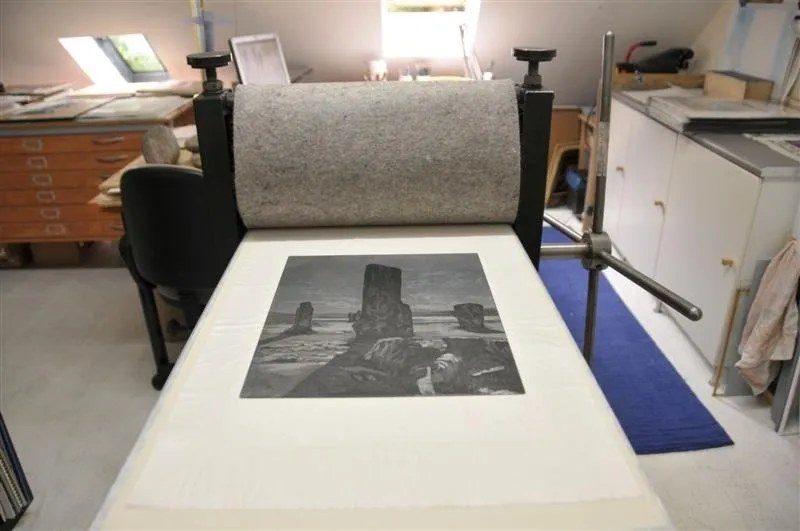
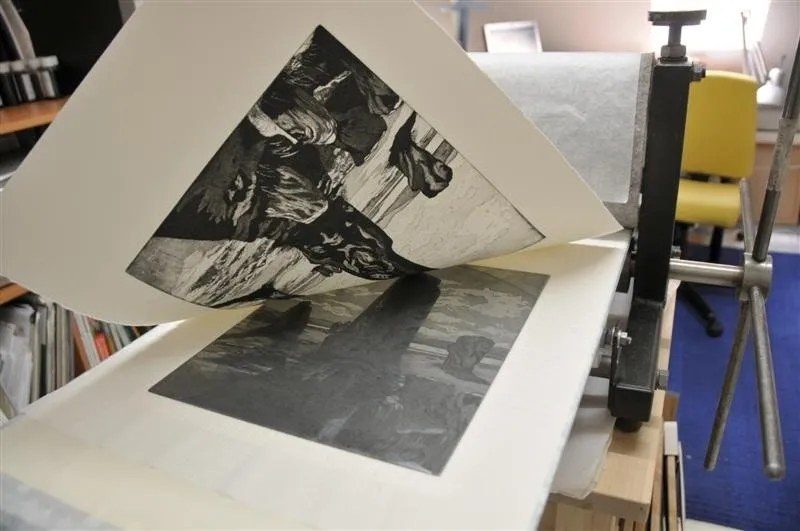
There are several stages to work through before the metal plate is placed onto the 'bed' of the etching press and the wheel is turned pushing, at pressure the damp printmaking paper into all the incised intaglio lines or dots to absorb the ink and transfer it to the paper.
It is at this point you 'pull' your print and reveal the end result of the process... it is always a moment of great anticipation sometimes disappointment, sometimes a moment of great joy and satisfaction... that's printmaking for you.
You either love it or hate it... a bit like marmite!
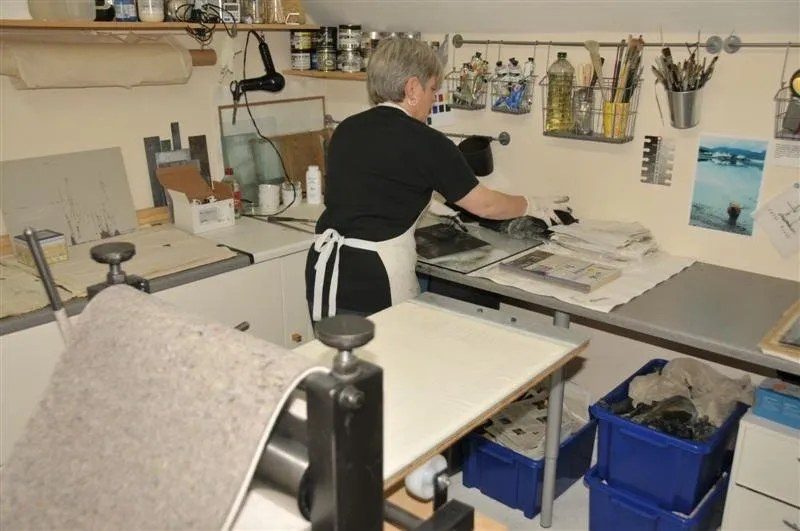
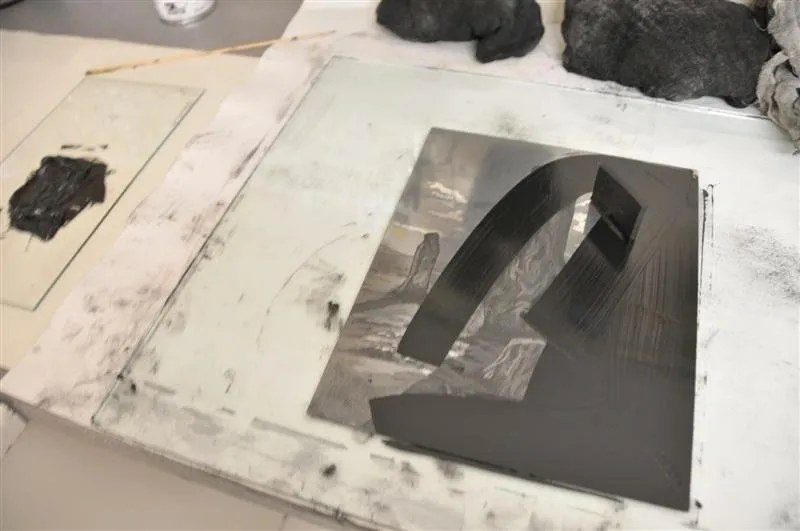
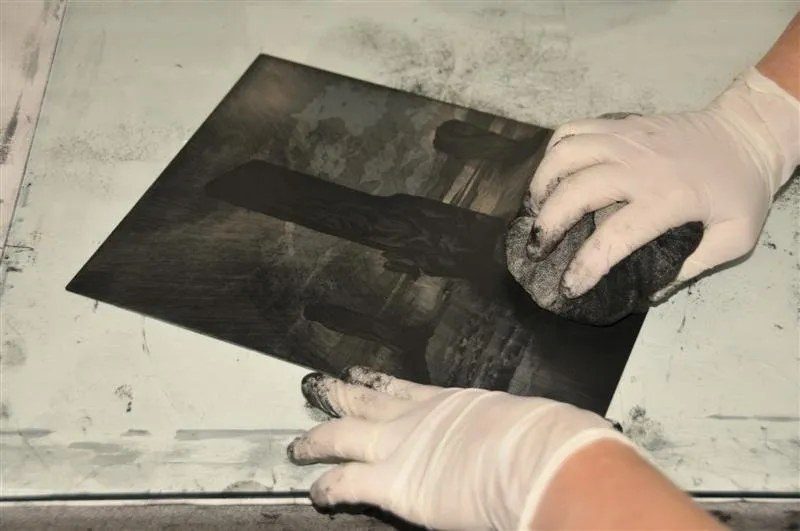
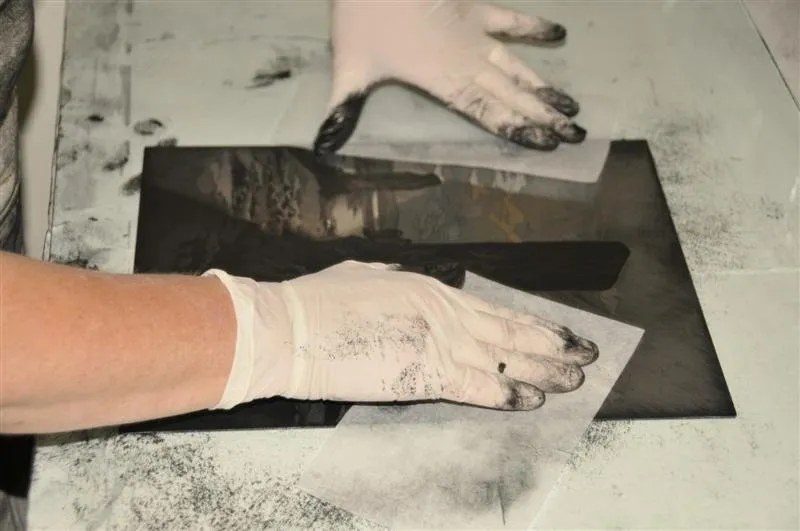
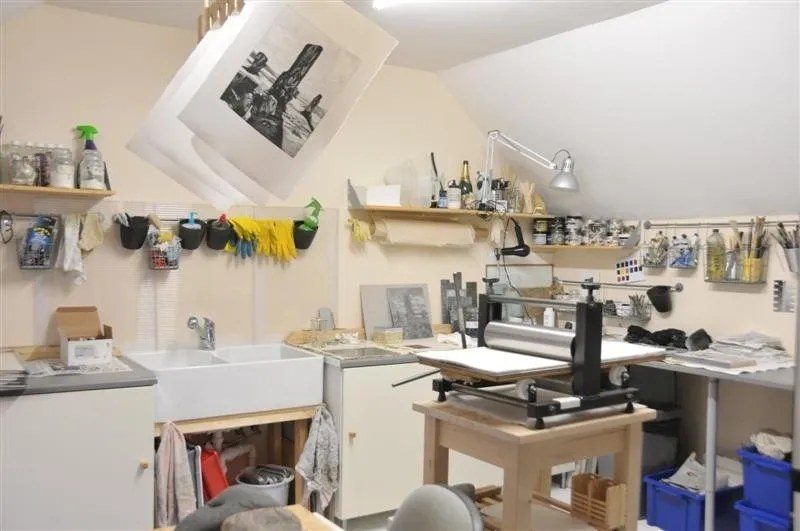
Anyway, I have included some photographs of some of the stages of the process when I was making the 'Calanais VI' etching, which is the tallest stone on this site and stands at one end of the burial chamber. I hope it demonstrates a little of what is involved and one of the things I love doing.
Printmaking... you have to work for it!