Blog / 15 June 2025
Celebrating World Gin Day 2025
When I discovered The Borders Distillery in my local town of Hawick I had to try the gin! It is delicious and I am always pleased to serve and recommend it to our visitors. As a painter of botanical subjects, I became interested in the ingredients of the gin and the connection to William Kerr, a 19th century plant hunter and botanist sent to China from Kew by Sir Joseph Banks! and his home town was Hawick. It was William Kerr, who in 1804 at the age of twenty-five, sent a living specimen from China of the single flowered 'Kerria japonica' back to the Royal Botanical Garden at Kew. It was there that the plant became recognised (previously wrongly classified) as being a separate member of the Rosaceae family and for this reason the plant is now named 'Kerria' to commemorate Kerr. William Kerr, his talent and skill have been truly recognised by naming this lovely botanical gin in his honour. Kerr's Gin... very nice!
The inspiration behind these Gin botanical designs comes from a very traditional botanical illustration process, whereupon a plant is dissected to reveal the unique detail making accurate identification possible. I find this a fascinating, secret world of the most interesting details and unless you went through this process you would never know plants are so intricately beautiful. Eventually, these designs will find themselves printed on everyday items in everyday use...
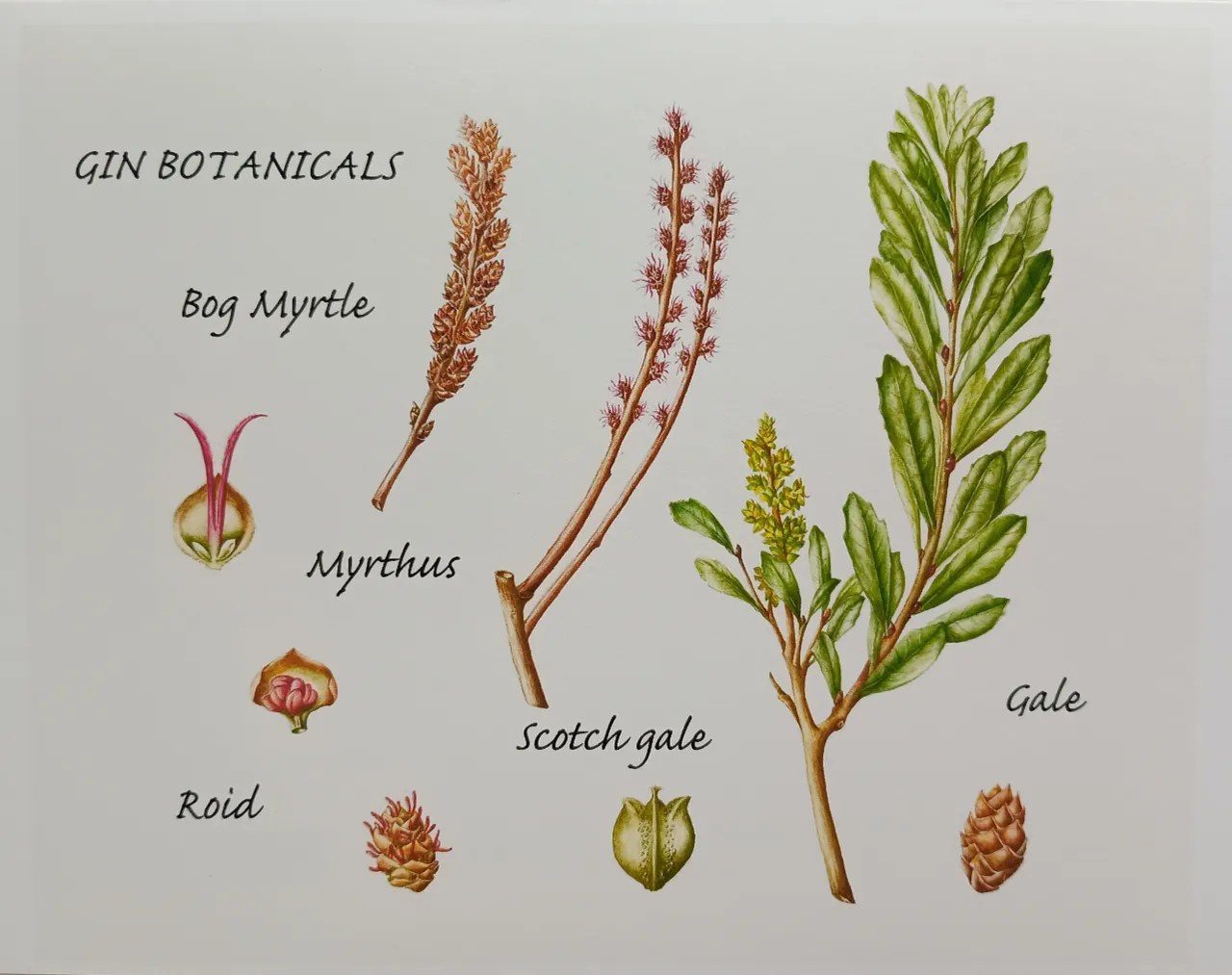
The 'Wetlands Myrtle' commonly known as the Bog Myrtle... Latin name 'Myrica gale' and a member of the Myricaceae, bog myrtle family. Interestingly the Gaelic name is 'Roid' with the old Scots name mainly used is 'Gale'. This shrub has a low, growing habit and as the name suggests thrives in the Scottish Highlands peat bogs, alongside rivers and on the edge of lochs (again only in the absence of grazing sheep). The berries are very small and covered with minute resinous glands with a fresh herbal, lemony scent. The essential oil is extremely useful for sensitive skin care and signs of ageing. Not only that, but the distinctive flavour when used in gin gives a soft and sweet aroma, with spicy notes and a little bitterness. Whenever I go to the Isle of Mull I collect Bog Myrtle and make it into an excellent midge repellent whilst visiting!
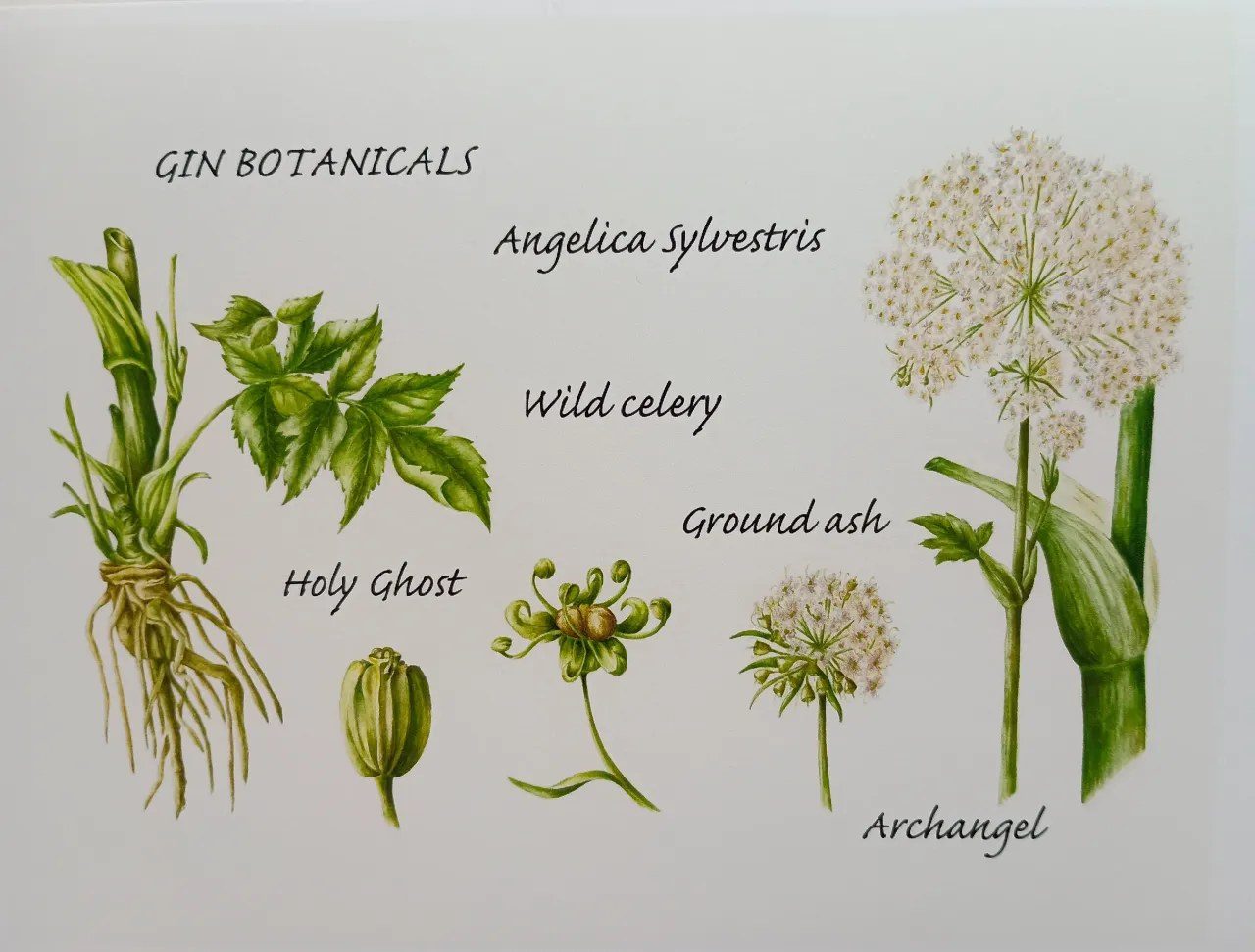
Angelica is a tall, biennial herb with a thick fleshy root and is part of the celery and parsley family of plants. Commonly used in gin along with many other botanicals, it contributes to a gin's unique profile of flavour. The 'herb of the angels' as it was known because it was believed to have medicinal properties has many other names and uses. Candied angelica is made by boiling the stems in sugar syrup and was very popular in Victorian cooking.
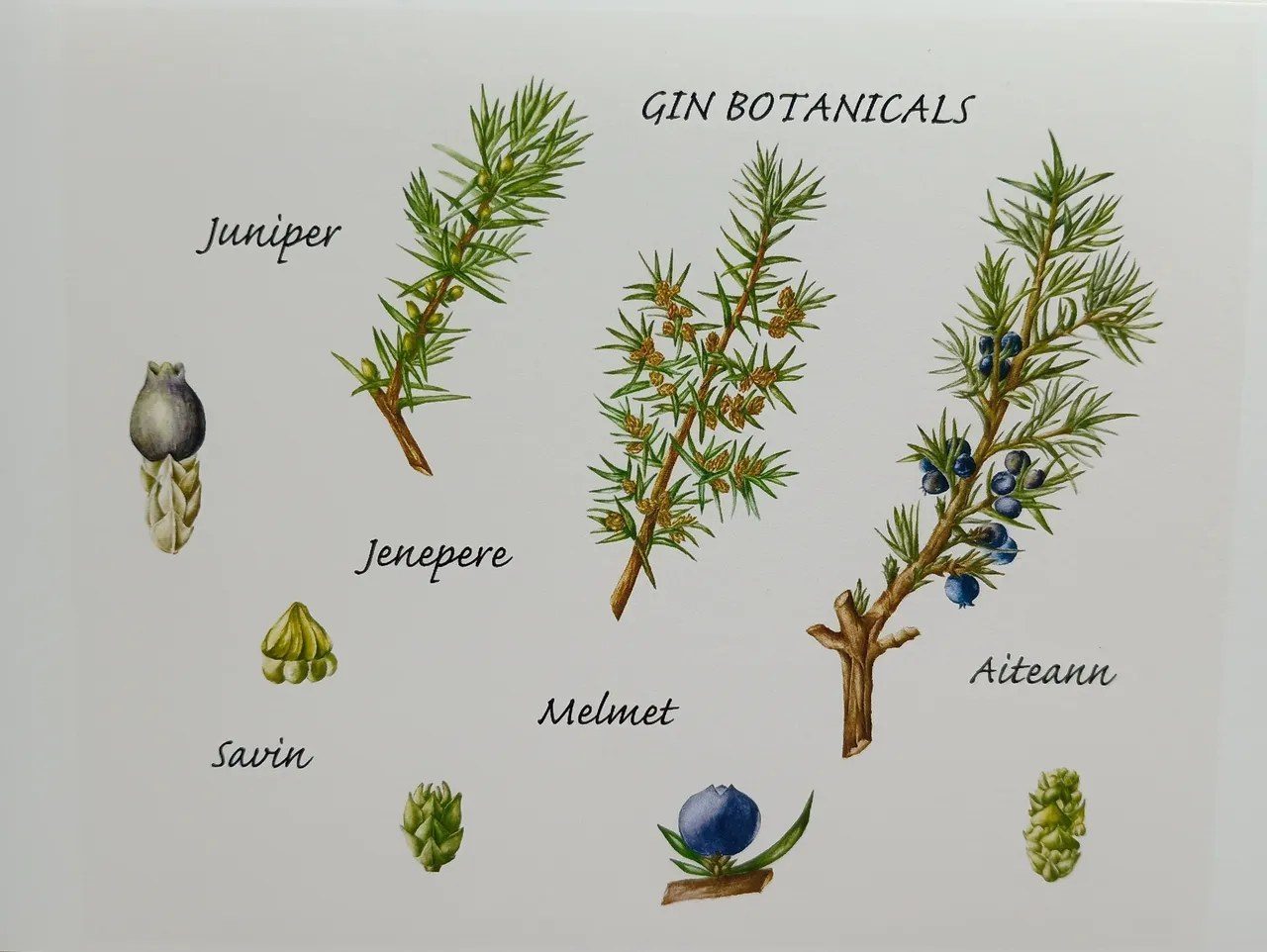
Juniper, it's not Gin without it! The word gin is derived from juniper, whether the French 'genièvre' or Dutch 'jenever'. The taste is dominantly pine in flavour. The Juniper is a member of the Cypress family and is a conifer, the berries are in fact cones. It grows on heathland and is common in Scotland, always assuming that sheep are not grazing! Juniper has many names as you would expect... the Gaelic name is 'Aiteann' and the old Scots name is 'Aiten'.